
Webinar Recap: Designing controls for effective testing
Most control testing problems start long before anyone pulls a sample. They start when the control is written and designed. A description that leaves too much open, evidence that can’t show what the reviewer actually looked at, a control still built around last year’s system: all of it surfaces eventually, and usually in the middle of the testing cycle.
The timing for this conversation was hard to ignore. Year end is approaching, audit committees are preparing to meet, and in the UK many teams are getting ready for their first Provision 29 reporting.
The idea for the session came from a customer conversation. When their framework first launched, the priority was getting controls up and running as quickly as possible. Over time, testing showed control performers clicking through each month with little real review behind the sign-off. They went back, redesigned the controls so that executing them meant something, and found the controls became easier to test as a result. Because a completed control vs. an effective control can be two very different things.
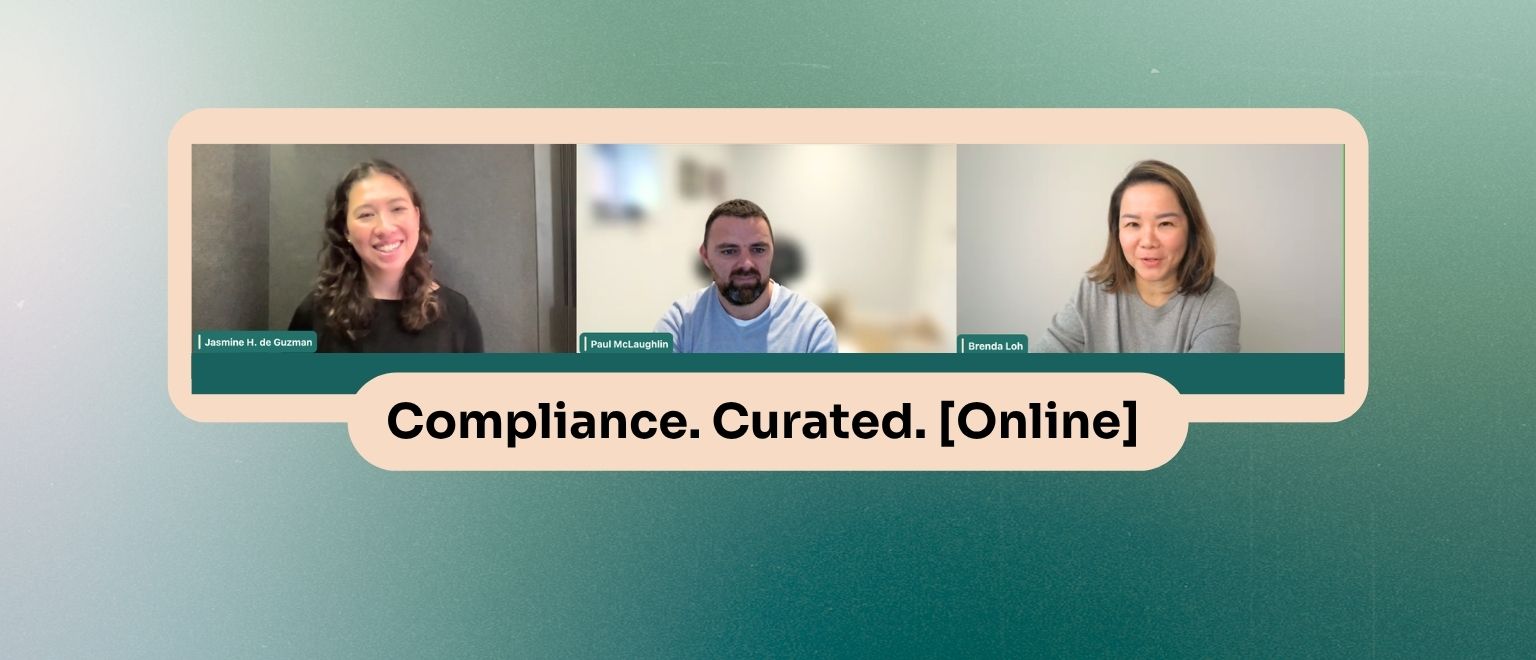
This Compliance. Curated. [Online] session brought together two practitioners who know both sides of that gap. With a background from PwC, Brenda Loh is Internal Control Director at Electrolux Group, covering internal control over both financial and sustainability reporting. As she put it, designing a control and testing a control “can sometimes feel like two completely different roles.” Paul McLaughlin is Head of Controls Transformation at Costain Group, where his current focus is the Provision 29 attestation for the board. He has around 20 years in risk and controls roles, starting at Deloitte before moving through oil and gas, utilities and logistics. Jasmine Hansen de Guzman, Marketing Director at Impero, moderated. The full session is available on demand here.
Where the audience is today
The session opened by asking attendees what most often makes a control difficult to test.

The answers were more evenly spread than expected. Inconsistent control execution came out on top at 34%, followed by lack of documented evidence at 27%, unclear control descriptions at 23% and unclear responsibilities and ownership at 16%.
Brenda went straight to inconsistent execution. In a multinational like Electrolux, with different regions, business areas, manufacturing and sales, the same control can be performed in very different ways. Paul saw all four as relevant, noting that a lack of documented evidence simply means more work to understand the control before you can test it.
Start with the risk
Are people thinking about testing when they design a control? Paul’s answer was honest: mostly no, and the control operator probably shouldn’t be. Their focus belongs on the risks in their process and what they rely on to manage them. Where the business needs help is in articulating that. People can walk you through an end-to-end process easily, but pinning down “this is the thing I rely on to manage my risk” is something you often have to coax out of them and then help them define.
Brenda agreed that most people start from compliance rather than testability, and that controls should address business and reporting risk rather than exist to satisfy the auditors. The most common mistake she sees, and usually only spots during testing, is a control designed around the activity instead of the risk in that activity. A walkthrough shows you what people do, so the control ends up describing it. Take a monthly review: the control should capture what the reviewer is actually looking at and why, and a tester should be asking exactly that question.
She added a practical point. Different stakeholders will give you different answers about the same process. Internal control has to apply judgment and keep coming back to the risk that the control needs to address.
The “how” is where descriptions fall short
A good control description answers: who, what, when and how. Both panelists agreed which one goes missing. The “who” is usually there, because people want to know who does what. The “what” and “when” are generally straightforward too. The “how” is the one that leaves room for interpretation.
Paul used a reconciliation as his example. A description will say it’s a monthly reconciliation done by a named role. It won’t say how the reconciliation is performed, what outputs the performer is looking for, or how those are assessed. The fix is to include the key points: which systems are being reconciled, how the data is obtained, what in the report needs verifying.
There is a balance to strike, though. Too much prescription in a control can tie someone to a method that may not manage the risk as well. Paul also argued that some of the responsibility sits with the tester. If a control is operated slightly differently from its description but still mitigates the risk and meets the requirements, he would still see it as effective. The conversation then becomes whether the description needs updating.
Not all evidence is equal
Brenda’s ranking was clear. The strongest evidence is system-generated: timestamped, traceable and hard to alter. Emails and screenshots can also work well, especially for reviews where follow-up happens outside the system. The weakest is the manual sign-off. With no timestamp and no detail, it says very little, and without a specimen signature on file you may not even know who signed it.
Paul echoed the preference for evidence that is systemized and not open to manipulation, with a caveat for testers. A system-based control should often be tested through the logic and access controls behind it. Manual controls without timestamps may need more supporting evidence to give comfort that they were performed at the right time, in the right way.
He also stressed the walkthrough. Testers don’t perform the process day to day, so understanding how a control operates is what lets them judge both whether it’s designed to mitigate the risk and whether it’s being operated as intended.
Standardize the objective, flex the execution
How much local variation can a standard control absorb before you’re really testing several different controls? Brenda, who is working on standardization at Electrolux right now, sees some localization as healthy. What should be standardized is the control objective, the risk being addressed and the expected outcome. The execution can be flexible, as long as it meets the objective. Different regions run different ERPs and operate in different ways, and as she put it, “you can’t standardize everything.”
Paul shared an example from his time in oil and gas, testing gifts and entertainment in Indonesia. The local team used different thresholds and a different recording mechanism. Because the test was scoped against group standards, the question was simply whether local practice sat within the group requirements. Where variation is driven by local legislation, though, the test needs to verify compliance with that legislation too. Understand why a control varies, whether the variation still meets your minimum standard, and what the risk of non-compliance is. Deviations are not necessarily bad, as long as they can be explained and accounted for within reason.
When a control turns into a procedure
Overly prescriptive controls create their own testing problems. At a port agency business, Paul’s internal audit team tested the same processes in every country. Payroll is a good example: one region had a standard process and provider, while others were localized and in some cases linked to government systems. A tightly prescribed payroll control would have produced permanent non-compliance in countries that simply could not follow it. His advice is to document the rationale wherever a local control departs from the group standard, so the audit trail shows the deviation was considered and the control adapted on purpose.
Brenda added that a lengthy, overly detailed control risks accidentally becoming a procedure. It also confuses people, and testers end up testing the wording instead of whether the control addresses the risk. Describe enough to make the control testable and leave the procedural detail out.
Paul pointed to the trap that creates: if a long description isn’t followed exactly, a tester may conclude the control isn’t effective, even when the risk is managed. “You’ve got to be careful not to tie yourself down.”
Spotting a control that has drifted
Brenda listed a few examples of signals that a control no longer matches its process. Control owners tell the tester “that’s not actually how we perform it.” Responsibilities have changed. The evidence consistently differs from the control description.
On who fixes it, both panelists were aligned on the three lines model. The first line owns the control and the fix. The second line, internal control, challenges and enables. The third line provides independent assurance. Paul frames it in RACI terms: someone may be responsible for operating a control, but someone in the first line, usually line management, should be accountable for making sure it is done right.
Paul added one more common signal: controls that still reference an old system or a superseded way of working. Systems change constantly, and without continuous review the control quickly becomes hard to test. His standing advice is to keep control descriptions system-agnostic and avoid naming individuals, so that updates reflect real changes in how you operate instead of a stream of renamed systems and people. That also makes life easier across regions running different ERPs.
One shared habit
The closing question asked each panelist for one habit control designers and testers should share.
For Brenda, it’s early collaboration, involving both the control owner and the tester. Don’t wait until testing to challenge whether a control is clear and what it needs to address.
Paul backed that and added a second: question what you’re writing and whether it gives you comfort over the risk. “We’ve always done it that way” and “that’s how the person before me did it” are phrases he hears often. Challenge them. Is it the best and most efficient way, and is the control designed to be as easy as possible to perform while still managing the risk?
Key takeaways
- Design around the risk. A control that describes an activity is hard to test. A control that describes what manages the risk in that activity gives the tester something to assess.
- Spell out the “how”. Who, what and when are rarely the problem. Capture the key points of how the control is performed, without writing a manual.
- Choose evidence with testing in mind. System-generated, timestamped evidence is strongest. Manual sign-offs say little on their own and need more support.
- Standardize objectives, allow local execution. Fix the objective, the risk and the expected outcome at group level, and document the rationale for any local variation.
- Keep controls current. Write descriptions that are system-agnostic and free of individual names, and treat “that’s not how we do it” as a signal to redesign.
- Collaborate early and challenge habits. Bring owners and testers together at the design stage, and question anything justified only by “we’ve always done it that way.”
Keep the conversation going
This session was part of Compliance. Curated., Impero’s ongoing series for finance, tax and compliance professionals. You can watch previous sessions in the full playlist on YouTube, and follow Impero on LinkedIn or sign up for our newsletter to get invites to upcoming webinars.
If you’re rethinking how your controls are designed and tested, get in touch with the Impero team for a walkthrough of how the platform can help.
Get the latest from Impero in your inbox.
Stay informed on all things Impero — webinar & event invites, exclusive content, product launches, and more! Or let us show you why Impero is the right choice for your risk and compliance needs.

You might also like...
Explore insights, product updates, and practical guidance to navigate the world of risk & internal controls.